
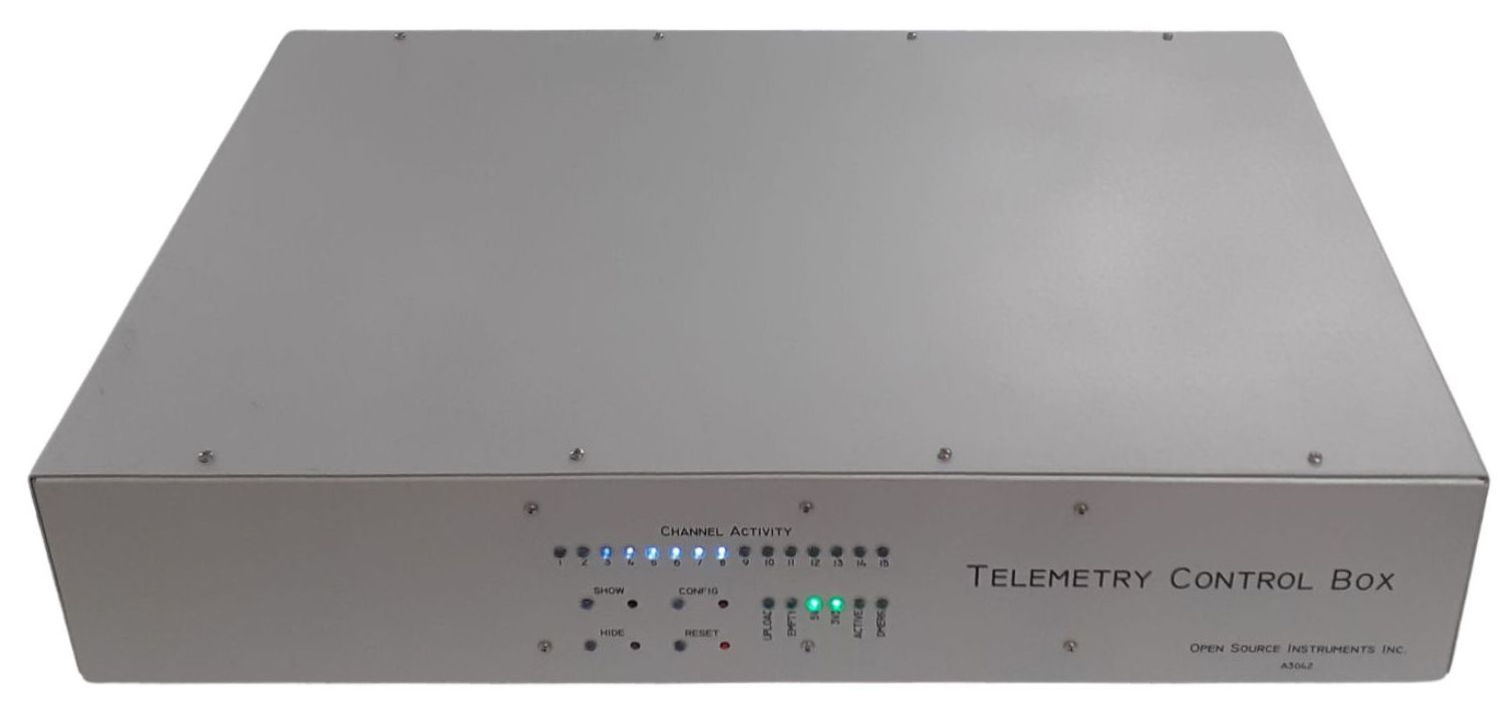
 Figure: A3042B-16 Telemetry Control Box (TCB). Width: 62 cm. The A3042B-16 provides telemetry reception and command transmission on sixteen independent antennas. The BNC sockets for antennas and an RJ-45 socket for PoE are on the back side. The A3042A-16 is identical in appearance, but provides only telemetry reception. |
|
A Telemetry Control Box (TCB) is a coaxial antenna telemetry receiver. It is also a telemetry sensor location monitor and a telemetry command transmitter. For telemetry reception, it provides antenna sockets on the back side, into which we plug telemetry antennas. The A3042A-16 Telemetry Control Box provides sixteen antenna inputs for telemetry reception. For location monitoring, it provides us with the number of the antenna that receives the strongest signal from each telemetry sensor, as well as a measure of the power of this strongest signal. The A3042B-4 and A3042B-16 Telemetry Control Boxes provide four and sixteen antennas respectively, and can commandeer all their antennas for command transmission, so as to control Implantable Stimulator-Transponders (IST) and configure programmable sensors, such as the A3054P-Series Intraperitoneal Transmitters (IPT). Command transmission interrupts telemetry reception for ten or twenty milliseconds. |
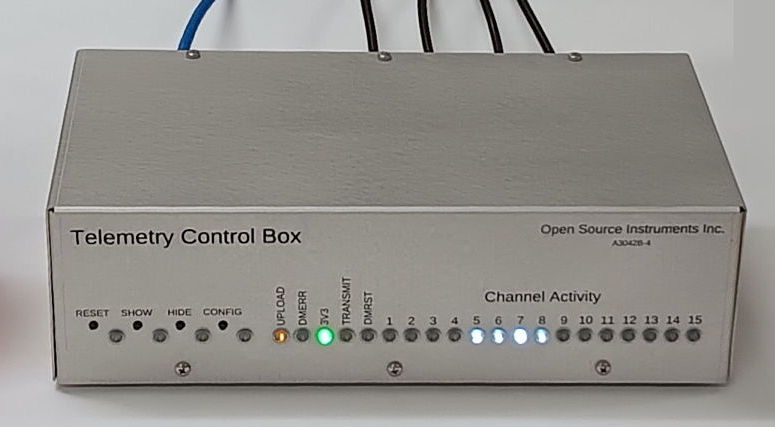 Figure: A3042B-4 Telemetry Control Box (TCB). Width: 27 cm. Four antenna sockets provide telemetery reception and command transmission. |
|
The telemetry signals transmitted by our sensors are infrequent and weak. They are unlikely to disrupt other devices using the 902-915 MHz frequency band. But the A3042B-16 radiates up to 4 W during its ten-millisecond command transmissions and the A3042B-4 radiates up to 1 W. In countries where the 902-915 MHz band is reserved for unlicensed use, there is no legal requirement that you operate your stimulator system within a Faraday enclosure. But in countries where this same frequency band is used for mobile phone communication, we recommend you purchase Faraday enclosures from us to make sure the system does not violate local emissions regulations, so as to avoid disrupting nearby users of the same band. |